
Nobody Taught Us How to Love. And It Is Costing Us Everything.
We learned to read. We learned to write. We learned mathematics and history and the periodic table. But nobody taught us how to love. Not how to give it, not how to receive it, not how to hold another person's heart with the care it deserves. This is the gap at the centre of human suffering. And it is time we talked about it honestly.Blog post description.
4/6/20265 min read
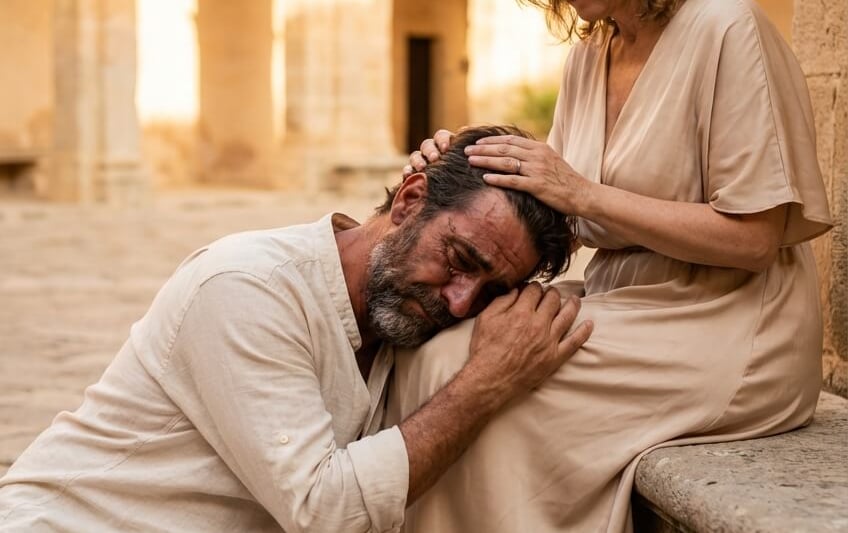
Nobody Taught Us How to Love.
And It Is Costing Us Everything.
Think about everything you were taught. Years of formal education — reading, writing, mathematics, science, history, geography. Everything the world decided mattered enough to put in a curriculum and require you to learn.
Now think about what was not there. What was never in any classroom you sat in, never on any syllabus, never assessed or graded or considered important enough to be given a single lesson.
How to love. How to be loved. How to hold another person's heart with genuine care. How to communicate in a way that connects rather than wounds. How to take responsibility for your own emotional world rather than making the people around you pay for it. How to be truly known by another person — and how to truly know them.
The most important education any human being could receive was simply not there. It was assumed to be happening somewhere else. At home. In the family. In the natural order of things.
But home was not the sanctuary it was assumed to be. Home was formed of people who were also never taught. Who were also carrying wounds that were never named, pain that was never held, patterns that were passed down so many generations that nobody could remember where they started. People doing the best they could with what they had — which was not nearly enough, and which was never their fault.
We assumed love was learned at home. But home is often a battleground of people carrying something they were never given the tools to put down. And so the wounds keep moving forward. Generation to generation. Family to family. Relationship to relationship.
— ✶ —
The gap at the centre of everything
There is a reason the mental health crisis is the crisis of our time. A reason loneliness has been declared a global epidemic — by the World Health Organisation, by the US Surgeon General, by every serious researcher who has looked at what is actually happening to human beings in the modern world. A reason that nearly half of all young adults report feeling that nobody truly knows them. A reason that anxiety disorders have increased by sixty percent in the last decade and show no signs of stopping.
It is not because people are fundamentally broken. It is because they were never given what they needed to be well. The tools for genuine human connection — the ability to love and be loved, to know and be known, to hold and be held — were assumed to be innate. Were left to chance. Were treated as private and personal and somehow outside the scope of what a society needed to teach its people.
And the cost of that assumption is everywhere. In the marriages that hollowed out quietly while nobody was watching. In the parents who loved their children with everything they had and still passed the wound forward because they did not know how to do otherwise. In the men who could not cry. In the women who could not stop. In the children who grew up in homes where love was present but nobody knew how to show it in a way that landed.
In the loneliness. In the disconnection. In the quiet, pervasive, almost universal sense that something is missing — that the life being lived is not quite the life that was supposed to be lived. That the love being given and received is not quite the love that was possible.
All the pain in this world comes from a lack of love. Not the absence of love — most people love the people around them deeply. The absence of the knowledge of how to love well.
— ✶ —
What intentional love actually looks like
Intentional love is not complicated. But it requires something most of us were never shown — the willingness to be present, to be honest, to be genuinely curious about the inner world of the person you are with.
It looks like asking — how do I love you best? Not assuming you already know. Not loving them the way you yourself want to be loved and calling that enough. Actually asking. And actually listening to the answer.
It looks like knowing your own wounds well enough to take responsibility for them rather than letting them bleed onto the people closest to you. Understanding that the anger that surfaces in your relationship is almost never about the relationship — it is about something much older that the relationship is touching. And choosing to address that older thing rather than making your partner pay for it.
It looks like being present enough, often enough, to actually know the people you love. Not the version of them from five years ago. The person they are right now, in this season of their life, with these particular joys and fears and questions and needs.
It looks like holding your children's hearts with the understanding that everything you say and do is shaping the adult they will become. Not with the weight of perfection — that is its own wound — but with the conscious awareness that this small person is watching how you love and learning from it what love is.
It looks like being willing to do the work of understanding yourself. Not because self-improvement is a virtue but because you cannot give what you do not have. You cannot hold another person's heart with tenderness if your own heart has never been held. And learning to give yourself what was never given is not selfish. It is the foundation of everything.
— ✶ —
What becomes possible
When people learn to love intentionally — when they are given the language and the tools and the ongoing support to show up differently in their relationships than they were shown — everything changes.
Not overnight. Not without difficulty. But fundamentally, irreversibly, in ways that ripple forward through families and communities and generations.
The child who grows up in a home where love is practised consciously carries that into their own relationships. Into the family they build. Into the way they hold their children. The pattern does not just stop — it actively reverses. Where there was wound, there becomes gift. Where there was disconnection, there becomes genuine knowing. Where there was loneliness, there becomes belonging.
This is not idealism. This is what the research shows, consistently and clearly. The quality of our relationships is the single most powerful predictor of health and wellbeing across the entire lifespan. More powerful than diet, more powerful than exercise, more powerful than wealth or status or any of the things the world tells us to pursue. The people who are well are the people who are genuinely connected. Who know and are known. Who love and are loved.
We have always known this, in the parts of ourselves that are older than any education system. We have just never built a world that reflects it.
This is the most important education humanity has never received. And it is not too late to begin. For any of us. At any age. In any relationship. In any family. It begins the moment we decide to be intentional about love.
— ✶ —
The beginning
You do not need to have gotten it right so far. You do not need to have been loved well in order to love well — though being given the tools and the language makes it infinitely easier. You do not need to have had a perfect childhood or a perfect marriage or a perfect relationship with your children.
You need to be willing to begin. To say — I was never taught this, and that is not my fault, and I am going to learn it anyway. For myself. For the people I love. For the children who are watching.
The world will not change through grand gestures or sweeping policies or the right government in power. It will change the way it has always changed — person by person, family by family, one relationship at a time becoming a little more conscious, a little more tender, a little more genuinely connected than it was before.
Nobody taught us how to love. But we can learn. And the learning — for ourselves, for each other, for the world we are leaving behind — is the most important work any of us will ever do.
Lamoureux Lane exists because this education has always been missing. The path to love. Humanity fully realised.
Connect
Feel the pulse of passion in every message
Call
paige@lamoureuxlane.com
© 2026. All rights reserved.
IMAGENIQ
ORENTE
HONOUR HER
PROUD & PASSIONATE
BECOME MAN
HUMANITAE WORKS
SACRED SONS