
The Most Radical Thing You Can Do in a World Run on Fear Is Choose Love
Blog post description.
We live in a world driven by fear and scarcity. Every headline, every algorithm, every system we have built is designed to keep us small, separate and afraid. But there is a different way. And it begins with a single choice. This is the path to love. Humanity fully realised.
4/6/20265 min read
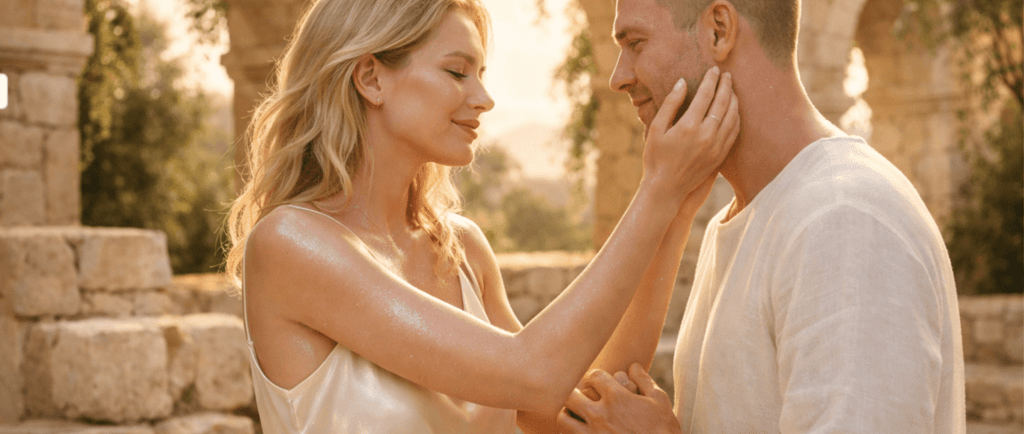
The Most Radical Thing You Can Do
in a World Run on Fear
Is Choose Love.
Look at the world we are living in. Really look at it. Not the surface of it — the headlines, the noise, the carefully curated feeds — but underneath all of that. Look at what is actually driving the systems and the structures and the daily decisions of billions of human beings moving through their lives.
It is fear. And it is scarcity. The belief that there is not enough — not enough safety, not enough love, not enough worth, not enough time, not enough of whatever it is that would finally make us feel like we are okay. The belief that other people are a threat to the limited supply of whatever we are trying to hold onto.
This is the world we inherited. Not the world we chose. The world that was handed to us by people who were handed it by people before them, all the way back through generations of human beings who were also afraid, also scarce, also doing the best they could with what they had been given.
And the remarkable thing — the thing that changes everything once you see it — is that none of this is inevitable. Not a single piece of it.
Fear and scarcity are not the natural state of human beings. Love is. Connection is. The desire to be seen and held and to see and hold others — that is what we were born with. Everything else was taught.
— ✶ —
The world we were handed
We were handed a world that profits from disconnection. Every algorithm is designed to make you anxious — because anxious people keep scrolling, keep clicking, keep consuming. Every news cycle is designed to make you afraid — because afraid people are manageable, predictable, easy to control. Every system of power we have built has been built on the understanding that a person who is afraid of not being enough will give almost anything to feel safe.
And so we learned to compete instead of collaborate. To protect instead of open. To perform instead of be. To present the version of ourselves that the world seemed to want rather than the actual, specific, completely irreplaceable person we actually are.
We learned to distrust. To armour up. To keep our hearts at a careful distance from the hearts of other people — because hearts that are close can be hurt, and we had already been hurt enough.
We learned to live small. To hold back the parts of ourselves that were too much. Too loud, too honest, too feeling, too alive. To fit ourselves into the shape the world seemed to require rather than the shape we actually were.
And we passed all of this to our children. Not because we wanted to. Because it was the only language we had.
Hurt people hurt people. Not from malice. From overflow. From carrying more than they were ever meant to carry alone, in a world that never taught them how to put it down.
— ✶ —
What choosing love actually means
When I say choose love, I am not talking about a feeling. I am not talking about something that happens to you when the right person walks into the room or the right circumstances align. I am talking about a practice. A daily, conscious, completely intentional practice of showing up differently in the world than the world taught you to show up.
It is choosing, in every interaction — with the person at the checkout, with the driver who cut you off, with the colleague who irritates you, with the child who is testing every boundary you have — to extend warmth instead of harm. To offer dignity instead of indifference. To treat the human being in front of you as sacred, because they are.
It is choosing to take responsibility for your energy. To understand that the way you show up in a room changes the room. That the way you speak to a child shapes the adult they will become. That the way you love the people closest to you is either a wound or a gift that they will carry for the rest of their lives.
It is choosing to be intentional about love in a world that has never asked you to be intentional about anything except your productivity and your consumption.
Every interaction we have in this world — with a stranger on the street or the person we profess to love most — we can hurt, or help, or heal. That choice is available in every single moment. And most of us have never been told it exists.
— ✶ —
The world that becomes possible
Imagine a world where people understood that. Where it was common knowledge — taught in homes, modelled by parents, woven into the fabric of how communities functioned — that every interaction is a choice, and that the choice you make matters.
Imagine children growing up in families where love was not left to chance. Where parents had been given the language and the tools to hold their children's hearts with tenderness and complete devotion. Where the home was not a battleground of people carrying wounds but a genuine sanctuary — a place where every person who lived there was seen and valued and truly known.
Imagine men who had been given permission to be soft. Who had not had their tenderness systematically removed from them by a world that was afraid of it. Who understood that their capacity for feeling was not a weakness to be managed but the most extraordinary thing about them.
Imagine women who had not been taught to make themselves smaller. Who walked through the world in the full power of who they actually are — not performing, not apologising, not holding back the parts of themselves that are too much — because they had never been told there was a version of them that was too much.
Imagine couples who knew how to tend to each other. Families that knew how to hold each other through the hard things. Communities that understood themselves as communities — as collections of people with a genuine responsibility to one another — rather than collections of isolated individuals competing for the same limited resources.
This is not a fantasy. This is what becomes possible when people learn to be intentional about love. When we stop leaving the most important thing — the thing that everything else depends on — entirely to chance.
— ✶ —
The choice in front of you
You cannot change the world by yourself. No single person can. But you can change your world. The specific, particular, completely unique world that you move through every day — the relationships you are in, the family you are building, the children you are raising, the people whose lives briefly touch yours at the checkout and the school gate and the office and the street.
You can choose, starting today, to be intentional about love. To ask yourself — in this interaction, am I hurting, helping or healing? To extend warmth where it is easier to withhold it. To see the human being in front of you rather than looking through them. To hold the hearts in your hands that have been placed there — by life, by choice, by love — with the tenderness they deserve.
That choice, multiplied by every person who makes it, is the only force in human history that has ever actually changed anything. Not governments. Not movements. Not technologies. People. One interaction at a time. One choice at a time.
In a world run on fear and scarcity, choosing love is not soft. It is not naive. It is the most radical, most courageous, most world-changing thing a human being can do.
This is the path to love. Humanity fully realised. And it begins exactly here, in the life you are already living, with the people who are already yours.
Lamoureux Lane is an offering — a practice, an art form, a life lived. The path to love, for every human being ready to walk it.
Connect
Feel the pulse of passion in every message
Call
paige@lamoureuxlane.com
© 2026. All rights reserved.
IMAGENIQ
ORENTE
HONOUR HER
PROUD & PASSIONATE
BECOME MAN
HUMANITAE WORKS
SACRED SONS